 CommerceHero
Affiliate operations · Commissions
The order is not the payout: a clearer way to manage affiliate commissions
Attributed sales are only the start. Learn how to handle returns, clearance periods, commission states, and payout readiness without confusing merchants or partners.
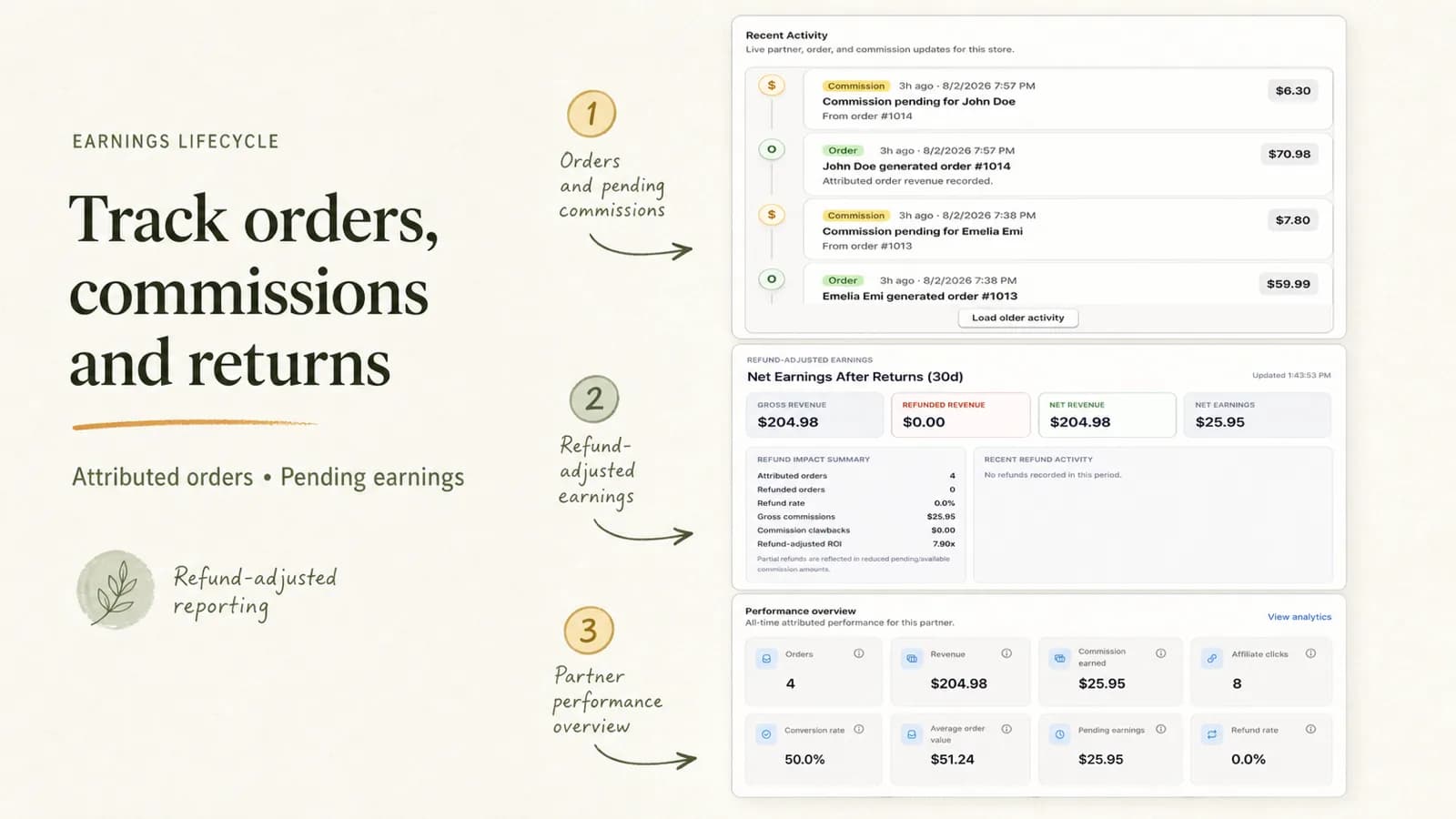
A partner can influence a sale today, but that does not always mean the commission should be paid today. The order may still be cancelled, partially refunded, returned, or changed before the merchant considers it settled. Strong affiliate operations make that waiting period visible instead of pretending attribution and payout are the same event.
Protect accuracy
Keep commissions connected to the order events that can change what is actually payable.
Reduce payout disputes
Give every earning a readable status and preserve the rule used to calculate it.
Review by exception
Let normal commissions progress predictably while unusual orders receive focused attention.
Separate attribution from commission eligibility
Attribution answers one question: which partner should receive credit for influencing an order? Commission eligibility answers another: does the order currently meet the program rules for earnings? Combining those questions into a single paid-or-unpaid field hides the most important part of the workflow.
Preserve the attribution record even when a commission is later adjusted. That history helps merchants explain what happened and lets them evaluate partner performance without treating every return as if the referral never existed.
Use commission states that describe reality
A useful commission state should tell the operator what has happened and what can happen next. Keep the vocabulary small, publish the definitions, and avoid vague labels that require someone to inspect the order manually.
- Pending: attributed, but still inside the review or return window.
- Cleared: eligible under the current rules and ready for payout planning.
- Held: paused because the order or activity needs review.
- Adjusted: changed because of a refund, return, cancellation, or correction.
- Paid: included in a completed payout record.
Design the clearance period around the store
There is no useful universal clearance period. A store selling immediately delivered goods has a different risk window from one selling products with longer fulfillment and return cycles. The program rule should reflect when the merchant can reasonably consider an order stable.
Tell partners when the clock begins, what can pause or reset it, and when a cleared commission moves into a payout. Predictability matters more than making the interval appear artificially short.
Handle partial refunds without losing the order story
Partial refunds expose the weakness of spreadsheet-based commission handling. The original order value, eligible line items, refund amount, commission basis, and adjustment can easily become disconnected. Replacing the first number with the latest number removes the audit trail merchants and partners need.
Keep each change tied to the order and calculate the resulting commission according to the documented program rule. When a merchant needs to make a manual correction, record the reason alongside the adjustment rather than leaving an unexplained total.
Build the payout from cleared records
A payout should be the result of reviewed commission records, not a fresh calculation assembled at the end of the month. Group cleared earnings by partner, surface held or adjusted items separately, and preserve which commissions were included when the payout was completed.
Affilyn connects attributed orders, commission status, returns, clearance timelines, partner earnings, and payout organization. That shared context helps merchants review what needs attention while giving partners a clearer account of how activity becomes payable earnings.